
In Issue 55 of Ghahveh Magazine, Davood Doostmohammadi, CEO of Nexa Group, reflects on more than two decades of experience in the construction industry, alternative approaches to design and development, and a developer’s responsibility for residents’ quality of life.
Issue 55 of Ghahveh Magazine features an interview with Davood Doostmohammadi, CEO of Nexa Group, exploring his experiences and perspectives on construction, architecture, and the developer’s role in shaping quality of life. The conversation reflects on decisions that sometimes challenged market expectations and helped shape a distinct approach to the design and development of Nexa’s projects.
One example of this approach is Nexa’s experience developing a residential building in Narmak. At a time when the market convention favored two 70-square-meter apartments per floor, Nexa opted for a single 140-square-meter, three-bedroom apartment, prioritizing spatial quality and well-proportioned interiors. The decision initially raised doubts among market professionals, but the sales results ultimately exceeded expectations. Reflecting on this experience, Davood Doostmohammadi says: “What the market has grown accustomed to is not always the best product we can offer it.”
This approach continued with another project in Zafaraniyeh. At a time when Roman-style façades and conventional materials were the dominant choices in Tehran’s District 1, Nexa, in collaboration with architect Alireza Taghaboni, opted for a modern, minimalist building featuring a ceramic façade. This distinctive approach was well received by the market, positioning the project at a higher price point than comparable developments in the area.
Attention to cultural context and local identity also holds a significant place in Nexa’s development experience. The Khansar project, with its cement façade and colour palette designed to complement the town’s traditional earthen architecture, reflects an effort to connect contemporary design with the local character of each region. From Nexa’s CEO’s perspective, the influence of such projects on the perspectives and design choices of other local developers represents an achievement that extends beyond the economic success of a single development.
Another part of the interview explores how quality in building design is defined. In Davood Doostmohammadi’s view, quality does not necessarily come from higher costs, larger common areas, or an extensive range of amenities. Designing spaces around residents’ actual needs, while accounting for long-term maintenance and operating costs, is part of a developer’s professional responsibility. Large lobbies and sports facilities contribute to quality of life when they are proportionate to users’ needs and the building’s financial capacity.
This approach extends Nexa’s responsibility beyond the design and construction phases. The establishment of NEXALIFE as an independent company dedicated to building management and resident services reflects the same philosophy: a commitment to quality of life that continues long after a project is handed over. On this subject, Doostmohammadi emphasizes: “A developer’s responsibility does not end when the keys are handed over.”
In the interview, he also discusses the potential of buildings to foster social interaction, group activities, and closer connections among neighbours. When balanced with respect for each resident’s privacy and individual lifestyle choices, this potential can enrich the experience of living in a community.
The final part of the interview outlines two long-term ambitions: developing an urban district that brings together architecture, green spaces, sports facilities, and cultural services; and building a high-quality, economically viable residential complex in southern or central Tehran. The aim is to create a model that can be presented to urban planners and professionals across the construction industry.
In Nexa’s CEO’s view, profitability is essential to the sustainability of any business. Its true value, however, comes from sound decisions and an enduring commitment to quality. He concludes by describing Nexa’s core philosophy:
“We may appear to be building structures, but what ultimately matters is the quality of life of the people who will live in them.”
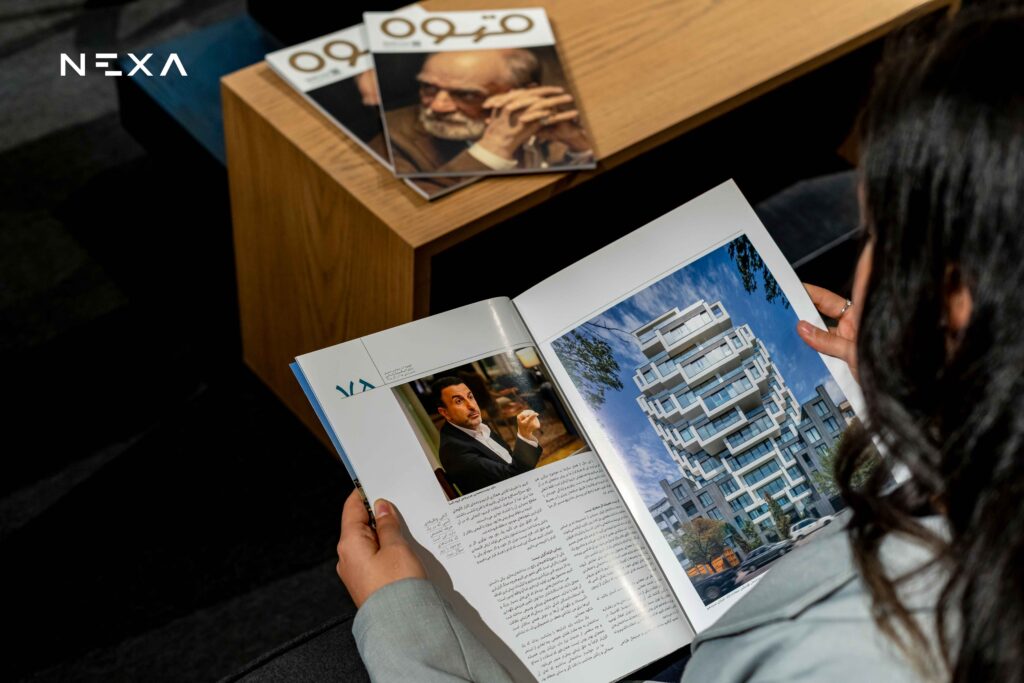
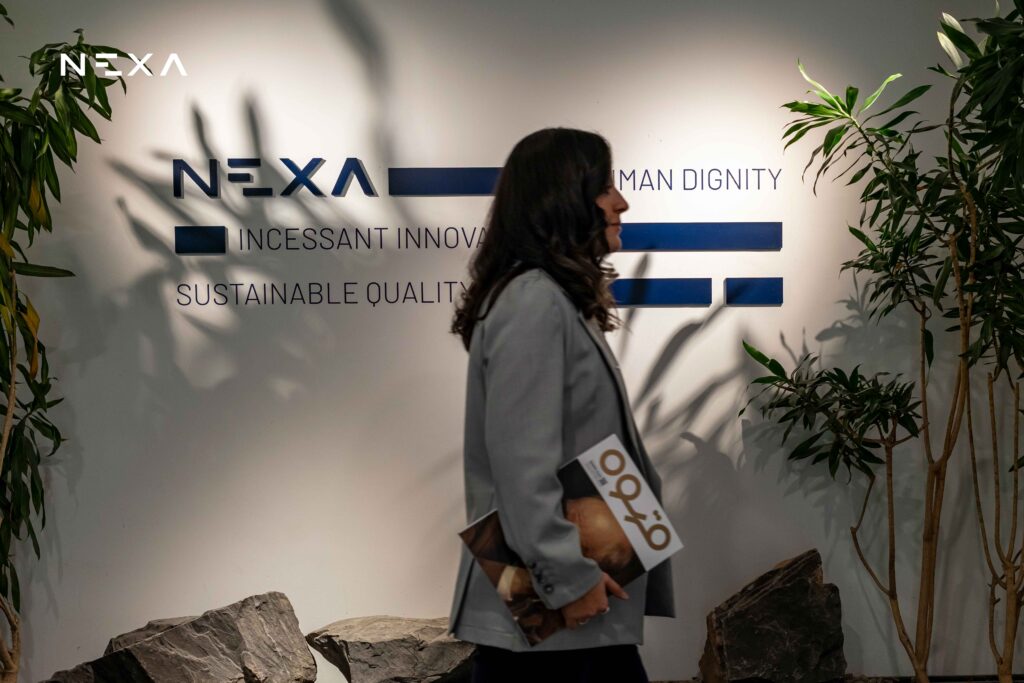
The full interview with Davood Doostmohammadi, titled “Building Iran Differently Is Possible!”, was published in Issue 55 of Ghahveh Magazine in November 2026. The digital edition of the magazine is available for download.
©2025 Nexa group. All Rights Reserved.
©2025 Nexa group. All Rights Reserved.