An Engineering Choice: Why Was Drywall Chosen for the Phoenix Project?

Although engineering is known for building, its most important part is the decisions and choices that reveal the true measure of engineering capability. The choice of each material, construction method, and technology sets a different path before a project, a path that can affect the speed of execution, the quality of performance, and the comfort of its users.


In the construction industry, many important decisions are never visible on the surface of a project. What determines a building’s quality, durability, and efficiency is often the result of choices backed by years of experience, engineering calculations, and a precise understanding of construction technologies. The choice of the drywall system for the Phoenix project was of this kind: a decision that was part of the project’s engineering approach to achieving, at the same time, faster execution, a lighter structural load, greater precision, and better maintainability of the building in the years ahead.

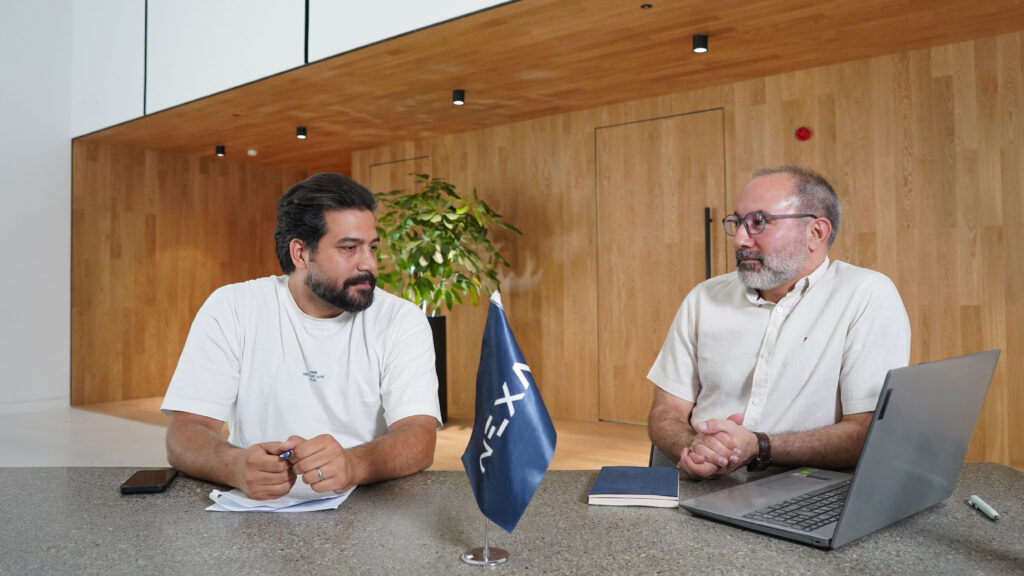
In this conversation, Eng. Momeni, the project manager, and Eng. Rezaeian, the execution supervisor, talk about the reasons behind this choice, their experience of implementing it, and the challenges they faced along the way in using one of the most widely used dry construction technologies in the world.

Why did you turn to drywall for the Phoenix project?

Eng. Rezaeian:
Before construction, various studies were carried out and we compared the different options from technical and execution standpoints. In the end, we concluded that drywall could be the best option for this project. In fact, choosing drywall for the Phoenix project was the result of a process of study and evaluation, not a matter of taste. The reason for this choice was that drywall allowed us to design a lighter structure and move the project’s execution stages forward faster. Together, these two factors, along with other conditions, made the choice cost-effective overall as well.

What standards did you follow in implementing the drywall?

Eng. Rezaeian said in response to this question:
In implementing the drywall, our basis was compliance with the international standards for this system. In addition, at every stage of execution, representatives of Knauf continuously supervised the installation process and the execution of details to ensure that all technical requirements were properly met.

Did you test the drywall's properties after it was installed?

Eng. Momeni: Yes. The most important test we carried out after installation was the acoustic insulation test, because we knew this was one of people’s main concerns. The common assumption is that drywall performs poorly in sound insulation, but our test results showed the opposite. In terms of preventing sound transmission, the system performed better than many of the traditional walls we had built before.

phoenix drywall

What challenges did you face in implementing drywall on Phoenix, and how did you resolve them?

Eng. Momeni’s answer to this question was as follows: Contrary to what many people assume, the main challenge of implementing drywall on the Phoenix project was not the system itself but the conditions of executing it in the Iranian market. Limited choice of suppliers and specialized installers means that part of the technology’s main advantage, its fast execution, is affected. Of course, this challenge applies to all projects under construction in our country. Another challenge related to architectural details. In projects with a distinctive design, not all details are covered in Knauf’s standard guides, and this requires more coordination between the design and execution teams. Throughout the project, we held numerous meetings with consultants and specialists in this field, with the engineers of the project’s technical and execution offices attending, and we revised some of the execution details so that we could stay true to the design requirements while also carrying out the project in line with Knauf’s standards.

Finally, what misconceptions do you think exist about drywall?

Eng. Rezaeian: In our society, using drywall has still not taken hold culturally. The most important misconception about drywall is that many people still see it as a low-strength system, as if it does not perform well against earthquakes, fire, or sound transmission. In fact, if the system is designed and installed to standard, it meets the requirements for each of these very well. But there is an advantage that is talked about less, which is the post-occupancy stage. In buildings that use drywall, carrying out repairs, modifying building services, or making changes to spaces is far simpler and less costly than with traditional methods.

Summary

The experience of the Phoenix project shows that choosing a construction technology is an engineering decision that affects every dimension of a project, from structural design and execution time to the quality of operation and maintenance. Drywall, too, can show its full potential only when it is used on the basis of technical standards, from design through execution, with close cooperation among the architect, the consultant, and the execution team.
What emerges from this conversation, more than anything, is the importance of hands-on experience. Many common beliefs about drywall have been shaped not by experience with real projects but by mistaken impressions. The experience of the Phoenix project’s engineers shows that with the right choice, standard execution, and careful supervision, this technology can be a dependable solution for today’s construction projects, one that, beyond meeting technical needs, also gives the building greater flexibility for the future.